 Delhi's colourful history
and its legacy of monuments inspired the British to build their new capital
here. If India represented for the British that portion of their empire on which
"the sun never sets" then for Edwin Lutyens, the world famous architect commissioned
to design New Delhi, the finished city was the "Rome of Hindoostan". Thanks
to his foresight Delhi is a city of space, of light and greenery, of wide avenues
and garden vistas and fountains and plazas.
Delhi's colourful history
and its legacy of monuments inspired the British to build their new capital
here. If India represented for the British that portion of their empire on which
"the sun never sets" then for Edwin Lutyens, the world famous architect commissioned
to design New Delhi, the finished city was the "Rome of Hindoostan". Thanks
to his foresight Delhi is a city of space, of light and greenery, of wide avenues
and garden vistas and fountains and plazas.
Today Delhi is a megalopolis, the
Ring Road that once contained it having been breached, and the city has spread
like a ripple into the neighbouring states of Haryana and Uttar Pradesh.
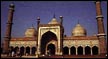 Perhaps the Persian inscription
on the ceiling of the Diwan-e-Khas (Hall of Nobles) in Shah Jehan's Red Fort
fired Lutyen's imagination. In it the poet, Firdaus, extravagantly claims, "If
there be a paradise on Earth; it is this, oh it is this, oh it is this". Certainly
echoes of the "paradise", in the form of architectural style, details and materials,
are found in Lutyen's neo-classical design for the new city including the Parliament
House, Rashtrapati Bhavan, India Gate, Connaught Place, the administrative buildings
South and North Blocks…
Perhaps the Persian inscription
on the ceiling of the Diwan-e-Khas (Hall of Nobles) in Shah Jehan's Red Fort
fired Lutyen's imagination. In it the poet, Firdaus, extravagantly claims, "If
there be a paradise on Earth; it is this, oh it is this, oh it is this". Certainly
echoes of the "paradise", in the form of architectural style, details and materials,
are found in Lutyen's neo-classical design for the new city including the Parliament
House, Rashtrapati Bhavan, India Gate, Connaught Place, the administrative buildings
South and North Blocks…
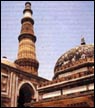 Besides respecting and incorporating
tradition in the new buildings, Lutyens preserved as landmarks and marks of
identity the grand ruins of the seven cities that existed at different times
on this historic site. So when the visitor drives through Delhi, he can glimpse
them in the picturesque and well-preserved old monuments that dot the city.
Besides respecting and incorporating
tradition in the new buildings, Lutyens preserved as landmarks and marks of
identity the grand ruins of the seven cities that existed at different times
on this historic site. So when the visitor drives through Delhi, he can glimpse
them in the picturesque and well-preserved old monuments that dot the city.
For example, Purana Quila was Indraprastha mentioned in the epic Mahabharata.
The ramparts of the old fort founded by the Pandavas in 1450 BC dwarf the ritzy
area of Mathura Road.
Modern Delhi is cosmopolitan
and offers the visitor a range of activities, from sightseeing and walks in
the numerous gardens to shopping and entertainment. Delhi is a city where you
can suit your pace and your purse. You have a choice of dining in dhabbas (cheap
eateries meant for blue collar workers) or in glitzy (and ruinously expensive)
5-star restaurants.
Theatre, music and shows from all over the world provide
choice entertainment through the year. Once Connaught Place was the commercial
hub of the city but today nearly every suburban neighbourhood is self-contained,
offering shops and eateries and entertainment.
Delhi is well connected
by air, road and train to all the other cities of India. Major international
carriers also service Delhi. It is especially convenient to use the city as
a base for travel to Western and Northern India.
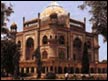 The epic Mahabharata refers
to Delhi as Indraprastha, supposed to have been founded by the Pandavas in 1450
B.C. Indraprastha's remains have been excavated within the ramparts of the Old
Fort (Purana Qila).
The epic Mahabharata refers
to Delhi as Indraprastha, supposed to have been founded by the Pandavas in 1450
B.C. Indraprastha's remains have been excavated within the ramparts of the Old
Fort (Purana Qila).





 About
the City
About
the City